
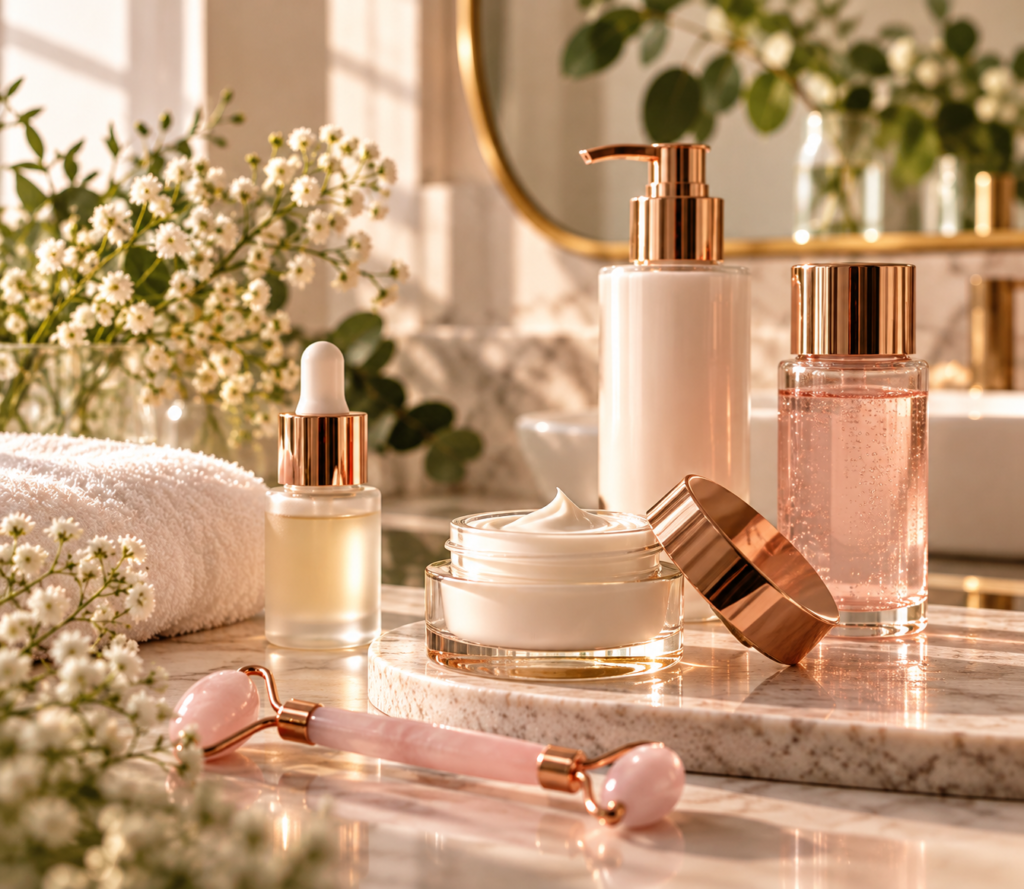
A good skincare routine doesn’t have to be complicated or expensive. With the right essentials, you can keep your skin clean, hydrated, and protected without filling your bathroom with unnecessary products.
In this guide, we’ll explore seven skincare essentials, explain what each product does, and help you choose the right options for your skin type and budget.
Product selection note: The examples below are an editorial shortlist based on published manufacturer information, not hands-on testing. The product links lead to brand information pages and are not affiliate links. Check the current label for ingredients and directions, as formulas can vary by region or change over time.
1. A Gentle Facial Cleanser
Cleansing is the foundation of a good skincare routine. A gentle facial cleanser helps remove dirt, excess oil, sunscreen, and everyday impurities without stripping your skin of its natural moisture.
What to look for:
- Dry or sensitive skin: Choose a fragrance-free, hydrating cleanser with ingredients such as glycerin or ceramides.
- Oily skin: Look for a gentle gel or foaming cleanser that removes excess oil without leaving your skin feeling tight.
- Combination skin: Choose a balanced cleanser that cleans effectively without drying out your cheeks.
Our advice: Start with a gentle cleanser rather than an aggressive exfoliating product. Cleanse in the evening, and adjust your morning routine according to your skin’s needs.
Product to consider: CeraVe Hydrating Cleanser. A non-foaming option designed for normal to dry skin, with ceramides and hyaluronic acid. It is a useful starting point if you prefer a gentle wash rather than a foaming texture. Massage onto skin wetted with lukewarm water, rinse well, and pat dry. If you wear waterproof makeup, use a suitable remover first when needed. Read the manufacturer’s product details and directions.
2. A Daily Moisturizer
Moisturizing is an essential step in almost every skincare routine, regardless of your skin type. A good moisturizer helps maintain your skin’s protective barrier, reduces moisture loss, and keeps your skin feeling comfortable throughout the day.
What to look for:
- Dry skin: Choose a richer cream containing ceramides, glycerin, or shea butter.
- Oily skin: Look for a lightweight, non-comedogenic gel or lotion.
- Sensitive skin: Choose a fragrance-free moisturizer with a simple ingredient list.
- Combination skin: A lightweight lotion may provide enough hydration without feeling heavy.
Our advice: Apply moisturizer after cleansing, ideally while your skin is still slightly damp. You don’t need an expensive product to get effective hydration.
Product to consider: CeraVe Moisturising Lotion. Consider this if you want a lightweight lotion rather than a rich cream. Apply to the face and neck after cleansing and any serum, smoothing it gently into the skin. Use morning and evening as needed. If your skin still feels dry, a richer cream may be a better fit. This step does not replace a separate sunscreen. Read the manufacturer’s product details and directions.
3. A Broad-Spectrum Sunscreen (SPF 30 or Higher)
Daily sun protection is one of the most important steps in a skincare routine. Sunscreen helps protect your skin from harmful ultraviolet (UV) radiation, which contributes to premature skin aging, dark spots, and skin cancer.
What to look for:
- Broad-spectrum protection: Choose a sunscreen that protects against both UVA and UVB rays.
- SPF 30 or higher: Look for at least SPF 30 for everyday use.
- Oily or acne-prone skin: Consider a lightweight, non-comedogenic formula.
- Dry skin: A moisturizing sunscreen may provide additional hydration.
- Sensitive skin: Mineral sunscreens containing zinc oxide or titanium dioxide may be suitable.
Our advice: Apply sunscreen generously as the final step of your morning skincare routine. Reapply approximately every two hours when outdoors, and after swimming or sweating, following the product’s instructions.
Product to consider: La Roche-Posay Anthelios UVMune 400 Invisible Fluid SPF50+. A lightweight, broad-spectrum option described by the manufacturer as suitable for all skin types, including sensitive skin. Consider it if you prefer a fluid texture. Apply generously before sun exposure and follow the instructions on your pack; water resistance does not remove the need to reapply. Use shade, clothing and a hat as well. Individual tolerance varies, even with products designed for sensitive skin. Read the manufacturer’s product details and directions.
4. A Targeted Facial Serum
A facial serum can be a useful addition to your skincare routine when you want to address a specific concern, such as dryness, uneven skin tone, or the appearance of fine lines.
Unlike cleansing, moisturizing, and sun protection, a serum is optional. The best choice depends on your skin’s individual needs.
What to look for:
- Dehydrated skin: A serum containing hyaluronic acid or glycerin can help attract and retain moisture.
- Uneven skin tone: Vitamin C or niacinamide may help improve the appearance of discoloration over time.
- Oily skin: Niacinamide may help reduce the appearance of excess oil.
- Sensitive skin: Choose a fragrance-free formula with fewer active ingredients.
Our advice: Start with one serum rather than combining several active ingredients. Introduce new products gradually and follow the manufacturer’s directions. A simple, consistent routine is often more useful than an expensive collection of products.
Optional product to consider: The Ordinary Hyaluronic Acid 2% + B5 (with Ceramides). This hydrating serum is an option for skin that feels dehydrated. The manufacturer recommends using it after cleansing and before heavier creams or oils, in the morning and evening. Patch test first and follow the directions on the bottle. Choose the version labelled “with Ceramides” if you want the formulation discussed here; the original version is different. If your moisturizer already keeps your skin comfortable, you can skip this extra step. Read the manufacturer’s product details and directions.
5. A Gentle Exfoliant
Exfoliation helps remove dead skin cells from the skin’s surface, which can improve the appearance of uneven texture and dullness.
However, exfoliation is optional. Using exfoliating products too frequently can cause dryness, redness, and irritation.
What to look for:
- Dry skin: Consider a gentle lactic acid (AHA) product, if your skin tolerates it.
- Oily or acne-prone skin: Salicylic acid (BHA) may help reduce clogged pores.
- Sensitive skin: Avoid harsh scrubs and strong exfoliating acids. Some sensitive skin types may not tolerate exfoliation at all.
- Beginners: Choose a mild product with clear instructions rather than a high-strength peeling treatment.
Our advice: Start with exfoliation no more than once a week, if needed, and monitor your skin’s response. Avoid combining multiple exfoliating treatments, and stop using a product if persistent irritation develops. Follow the manufacturer’s instructions and protect your skin from the sun.
6. A Nourishing Lip Balm
Your lips have a delicate protective barrier and can become dry or chapped, especially during cold weather or prolonged sun exposure.
A good lip balm helps reduce moisture loss, keeps lips comfortable, and protects them from environmental conditions.
What to look for:
- Dry or chapped lips: Choose a balm containing petrolatum, shea butter, or other moisturizing ingredients.
- Sensitive lips: Look for fragrance-free products without menthol or strong flavorings.
- Daytime protection: Consider a lip balm with SPF 30 or higher when spending time outdoors.
- Everyday use: A simple, affordable formula is often sufficient.
Our advice: Apply lip balm whenever your lips feel dry, especially before going outdoors or at bedtime. Avoid licking your lips, as this can make dryness worse. If cracking or irritation persists, consult a healthcare professional.
7. A Gentle Makeup Remover
If you wear makeup, especially waterproof mascara or long-lasting foundation, a dedicated makeup remover can make your evening skincare routine easier.
A good makeup remover helps dissolve cosmetics without excessive rubbing, which can irritate delicate facial skin.
What to look for:
- Sensitive skin: Choose a fragrance-free micellar water or gentle cleansing balm.
- Dry skin: Consider a moisturizing cleansing oil or balm.
- Oily skin: Look for a lightweight makeup remover that rinses away easily.
- Waterproof makeup: Choose a product specifically formulated to remove long-lasting cosmetics.
Our advice: Remove makeup gently before bedtime. If necessary, follow with your regular facial cleanser to remove remaining residue. Avoid rubbing the delicate skin around your eyes.
A Simple Morning and Evening Routine
Morning: Cleanse gently as needed, apply the optional hydrating serum, then moisturizer if your skin needs it. Finish with a broad-spectrum sunscreen with SPF 30 or higher before makeup. When outdoors, reapply sunscreen every two hours and after swimming or sweating, following the label.
Evening: Remove makeup if you wear it, cleanse, then apply the optional hydrating serum and moisturizer. Add lip balm if needed. Exfoliation is an occasional extra, not a required daily step.
Keep your first purchase small: Start with a cleanser, moisturizer and sunscreen. Keep products you already tolerate; you do not need to replace everything or buy all four examples. Introduce one new product at a time so it is easier to notice irritation. Stop using a product that irritates your skin; persistent symptoms deserve advice from a qualified healthcare professional.
Further reading: The American Academy of Dermatology explains what to look for in a sunscreen and how to apply and reapply it. Product-specific sources are linked beside each example above.
Final Thoughts: Keep Your Skincare Routine Simple
You don’t need dozens of expensive products to build an effective skincare routine.
Start with three essentials: a gentle cleanser, a suitable moisturizer, and broad-spectrum sunscreen with SPF 30 or higher.
The other products in this guide are optional additions that can help address your individual needs.
Remember: The best skincare routine is one that suits your skin, fits your budget, and is easy to follow consistently.
For a similarly streamlined approach to getting dressed, explore our guide to building a capsule wardrobe you will actually wear.